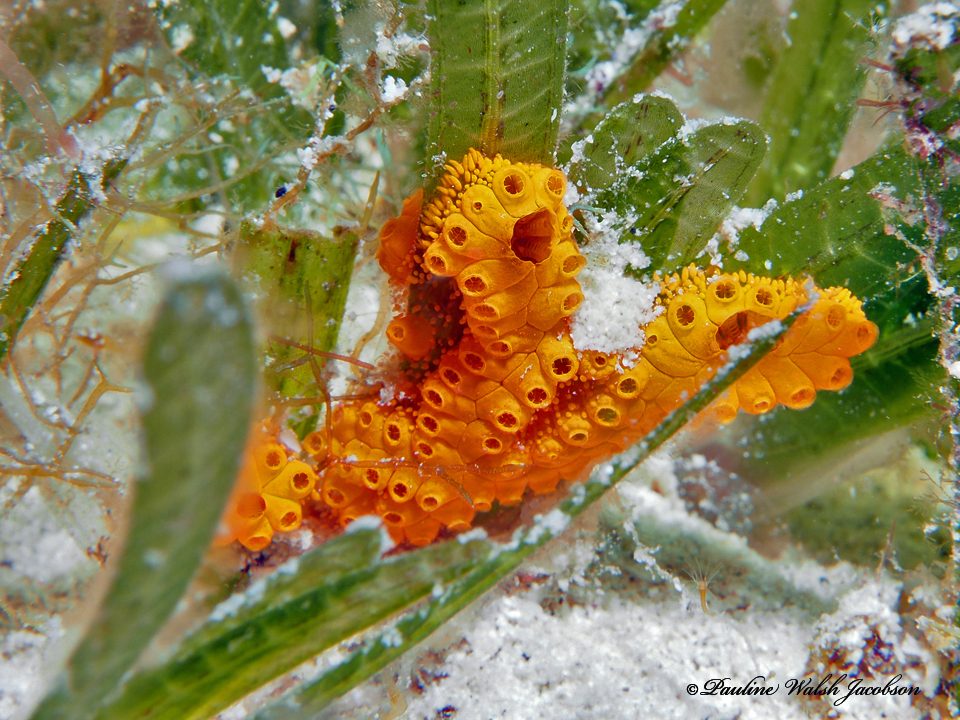
Botrylloides violaceus is a colonial ascidian. It is commonly known as the chain tunicate, but has also been called several other common names, including: lined colonial tunicate, orange sheath tunicate, orange tunicate, and violet tunicate.
Its native range is in the northwest Pacific from southern China to Japan and Siberia. Colonies grow on solid substrates and consist of individuals arranged in twisting rows. Outside its native range, it is considered an invasive species and is becoming more common in coastal waters of North America and other waters around the world, likely being spread by shipping activity.
In the San Francisco Bay area, B. violaceus can be readily found on boat docks in the Richmond Marina. The ecological impact of B. violaceus in this region remains unknown.