← All marine life
Blue-Lined Octopus
Species IUCN · Least Concern (LC)

Blue-Lined Octopus

Hapalochlaena fasciata, (Hoyle, 1886)

marine

About Blue-Lined Octopus

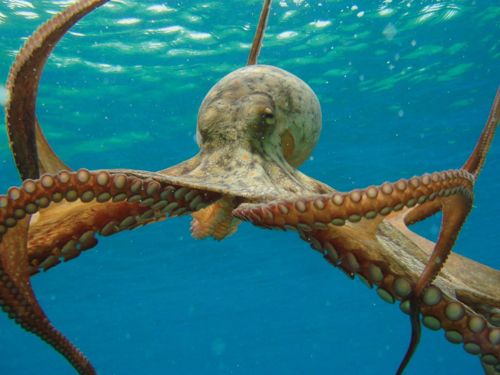
The blue-lined octopus (Hapalochlaena fasciata) is one of four species of extremely venomous blue-ringed octopuses. It can be found in Pacific Ocean waters that stretch from Australia to Japan. It is most commonly found around intertidal rocky shores and coastal waters to a depth of 15 metres (49 ft) between southern Queensland and southern New South Wales. It is relatively small, with a mantle up to 45 millimetres (1.8 in) in length. In its relaxed state, it is a mottled yellow-brown with dark blue or black streaks covering the whole body apart from the underside of its arms, but its vibrant blue markings appear as a warning to predators when it feels threatened. Along with its other closely related species, the blue-lined octopus is regarded as one of the most dangerous animals in the sea, and its venom can be fatal to humans. This benthic octopus is one of four members of the genus Hapalochlaena, with the other species being the greater blue-ringed octopus (Hapalochlaena lunulata), southern blue-ringed octopus (Hapalochlaena maculosa), and the blue-ringed octopus (Hapalochlaena nierstraszi). The blue-lined octopus is the only species of the four to display lined iridescent blue marking, as opposed to circular iridescent blue marking that the three other species tend to exhibit.

Habitat

Blue-lined octopus are commonly found off the coast of Australia inhabiting shallow tropical and subtropical reef waters. However, in recent years they have been found to distribute throughout the Pacific Ocean. They have been recorded off the east coast of Japan, as well as off the coast of Jeju Island in Korea in 2015. This can suggest that the warming of ocean water has caused a shift in suitable habitat for these octopus, this shift is important to monitor as if can aid is public health and safety.

Behaviour

Blue-lined octopuses tend to swim around shallow areas of coral reefs and tide pools. They often hide in crevices of reefs, empty seashells, and other ocean resources they can find to conceal their identity. Blue-lined octopuses are known to be nocturnal hunters, while other species in the genus such as the greater blue-ringed octopus (H. Lunulata) is known to be diurnal hunter. Prey for blue-lined octopuses mostly consists of crustaceans and stomatopods, however in captivity they have been recorded to eat live fish, suggesting they do in the wild as well. They do not use their venom (known as tetrodotoxin) to kill their prey, but instead trap it inside their arms and pierce them with its parrot-like beak.

Reproduction

The blue-lined octopuses start reproducing at a year old. During breeding male blue-lined octopus will seek and mount females, they do not extend the hectocotylus and mate from a distance like other octopus species. If they are successful, the female octopus will lay 50 to 100 eggs 30 days after the encounter. During the 30 days, the female octopus hides her eggs under her arms and does not leave her hiding spot until the eggs hatch. After her eggs hatch, the female octopus dies. These eggs are large and produce benthic hatchlings, development for these hatchlings takes about two months.

Part of

Where to see it

No dive sites list Blue-Lined Octopus yet. Explore the map to find sites near you.