← All marine life
Black Bream
Species IUCN · Least Concern (LC)

Black Bream

Acanthopagrus butcheri, (Munro, 1949)

marinebrackishfreshwater

About Black Bream

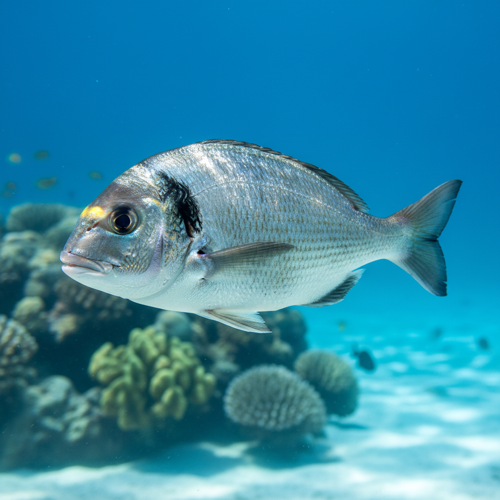
The black bream (Acanthopagrus butcheri), also commonly known as the southern black bream, southern bream and blue-nosed bream, is a species of anadromous ray-finned fish of the porgy family Sparidae. A deep-bodied fish, it is occasionally confused with other similar species that occur within its range, but is generally distinguished from these species by a lack of yellow ventral and anal fins. Southern black bream are endemic to the southern coasts of Australia from Shark Bay in Western Australia to Ulladulla, New South Wales, as well as Tasmania.

The black bream is primarily an inhabitant of brackish waters of estuaries and coastal lakes, rarely entering the open ocean, as it cannot complete its life cycle in a fully marine environment. During the breeding season, the species is known to penetrate into the upper reaches of rivers to spawn, causing an influx of juveniles in the estuaries a few months later. It is an opportunistic predator, consuming a wide range of crustaceans, molluscs, polychaetes and forage fish.

The southern black bream is a major target for both commercial and recreational fishing due to its high-quality flesh, with over 300 tonnes of yield taken each year by commercial fisheries. Anglers also pursue the fish for its sporting qualities, with the development of lure fishing for bream adding to this attraction. Aquaculture techniques for the species are being developed, but its slow growth rate poses a major hurdle to large scale food production.

Appearance

The southern black bream has a deep, moderately compressed body, with both the dorsal and ventral profiles equally curved. The mouth is of moderate size in comparison with the body, and contains six curved, peg like incisors in the front of both upper and lower jaws. The molars are set in series of four or five on each side of the upper jaw, and in series of three or four on the sides of the lower jaw, becoming smaller in size anteriorly.

The body is covered with large scales, which may be cycloid or weakly ctenoid in shape. The head is mostly scale-free, with the exception of parts of the operculum. A low, scaly sheath covers the bases of the soft dorsal, anal and caudal fins. The lateral line scale count is 52–58.

Habitat

The southern black bream is endemic to southern Australia, inhabiting coastal waters from Shark Bay, Western Australia in the west to Mallacoota, Victoria in the east and south around the entire Tasmanian coastline. The species is primarily an inshore species, although has been found on rare occasions on deeper reefs on the continental shelf.

Diet

Apart from humans, a variety of seabirds are the southern black bream's main predators, with the pelican, little black cormorant and great cormorant prominent. The species is also taken by larger fish including sharks, rays and a number of large predatory teleosts such as mulloway and flathead.

A number of ectoparasites are known from the species, including species from the Copepoda, Monogenea, Branchiura, Isopoda and Hirudinea.

Reproduction

Southern black bream become sexually mature at different ages throughout their range, with Western and South Australian fish maturing by two to three years of age, while Victorian fish mature at five years. There is also a difference in maturation age between the sexes, as females generally mature one year later than males.

The timing of spawning is also variable over the species range, with fish in Western Australia able to spawn from July to November, South Australian fish spawning between November and January and Victorian fish in October to November. Reproducing fish migrate into the upper reaches of rivers and streams, where they shed their eggs, with each fish producing up to three million per season. The eggs are small and pelagic, hatching two days or so after fertilisation.

Humans & conservation

Southern black bream are one of the most important species to both commercial and recreational fisheries throughout its range, valued for its flavoursome and moist flesh. Due to its marketability, as well as its high tolerance to a wide range of salinity, the species has become a candidate for inland aquaculture in saline dams.

Part of

Where to see it

No dive sites list Black Bream yet. Explore the map to find sites near you.