
← All marine life
Bicolor Angelfish
Species IUCN · Least Concern (LC)

Bicolor Angelfish

Centropyge bicolor, (Bloch, 1787)

marine

About Bicolor Angelfish

The bicolor angelfish (Centropyge bicolor), also known as the Pacific rock beauty, oriole angelfish, oriole dwarf angel, blue and gold angel or two-colored angel, is a species of marine ray-finned fish in the angelfish family Pomacanthidae.

Appearance

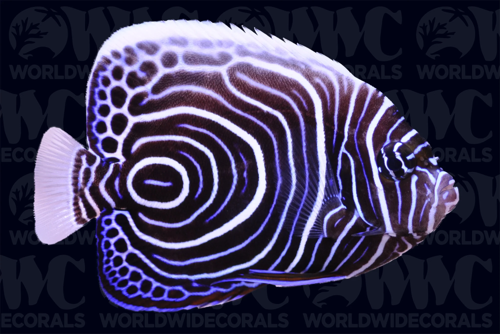
The bicolor angelfish is a small, easily recognizable fish. The head (excluding the areas around and above the eyes), the front of the body and the pelvic and caudal fins are bright yellow, the pectoral fins are essentially transparent, and all other parts are dark blue.
Habitat

The bicolor angelfish is found in the Indo-Pacific region, including East Africa, southern Japan, Australia, the Philippines and Fiji. It lives at a depth range of 1–25 m (3.3–82.0 ft), and is associated with reef slopes, coral-rich areas, lagoons, and near drop-off areas.

Behaviour

The diet of a typical bicolor angelfish consists of small crustaceans (such as brine and mysis shrimp), as well as tunicates, corals, sponges, worms, algae, and sometimes clams.

Reproduction

The larval stages of the bicolor angelfish lasts for approximately 32 days. All larvae are female, as this species is a protogynous hermaphrodite, and sex change only happens in adulthood and in special circumstances (see below). The life expectancy of this species in the wild varies greatly depending on location, and ranges between 5 and 13 years.

Part of

Where to see it

No dive sites list Bicolor Angelfish yet. Explore the map to find sites near you.