
← All marine life
Bass
Group IUCN · Least Concern (LC)

Bass

Micropterus dolomieu, Lacepède, 1802

freshwater
Where to see it

About Bass

The smallmouth bass (Micropterus dolomieu) is a species of freshwater fish in the sunfish family (Centrarchidae) of the order Centrarchiformes. It is the type species of its genus Micropterus (black basses), and is a popular game fish sought by anglers throughout the temperate zones of North America, and has been spread by stocking —as well as illegal introductions—to many cool-water tributaries and lakes in Canada and more so introduced in the United States. The maximum recorded size is approximately 27 inches (69 cm) and 12 pounds (5.4 kg).

The smallmouth bass is native to the upper and middle Mississippi River basin, the Saint Lawrence River–Great Lakes system, the Champlain Valley, and the Hudson Bay basin. Its common names include smallmouth, bronzeback, brown bass, brownie, smallie, bronze bass, and bareback bass.

Appearance

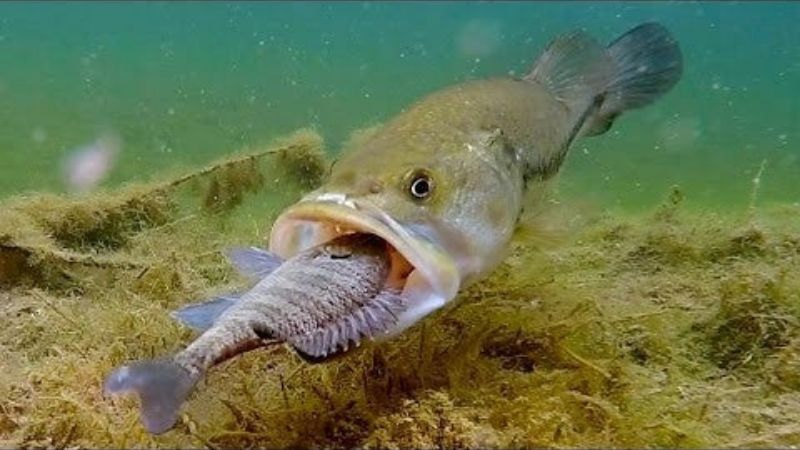
Smallmouth have a slender but muscular fusiform body shape making them powerful swimmers. The coloration of the smallmouth bass's ctenoid scales range from golden-olive to dark brown dorsally which fades to a yellowish white ventrally with dark brown vertical bars or blotches along the body and dark brown horizontal bars on the head. The combination of the muscular fusiform body shape and camouflage like coloring make these fish highly effective ambush predators. The coloration can vary greatly depending on the fishes age, habitat, water quality, diet, and the spawning cycle.

Generally, the protruding jaw of the smallmouth does not extend back beyond the eyes which are red or brown. They have two dorsal fins which are separated by a shallow interdorsal notch. The front dorsal has 9–11 spiney rays and the back dorsal has 13–15 soft rays.

Habitat

The smallmouth bass is found in clearer water than the largemouth, especially streams, rivers, and the rocky areas and stumps and also sandy bottoms of lakes and reservoirs. It can also survive in a stronger current than other black bass. The smallmouth prefers cooler water temperatures than its cousin the largemouth bass, and as a result will often seek out deeper, faster moving water during the hot summer months. Because it is intolerant of pollution, the smallmouth bass is a good natural indicator of a healthy environment, though they are still much more resilient than most trout species. Carnivorous, its diet comprises crayfish, amphibians, insects, and smaller fish, while the larvae feed on various zooplankton and insect larvae. Adults also cannibalize young of other parents.

The female can lay up to 21,100 eggs, which are guarded by the male in his nest.

Where to see it

Top-rated dive sites where divers have spotted Bass.

Bat Yam

Bat Yam

⭐ 1.0 Scout Score
Bat Yam: sheltered rock pool for safe snorkeling and shallow marine life.
👣 Shore Beginner