← All marine life
Atlantic Silverside
Species IUCN · Least Concern (LC)

Atlantic Silverside

Menidia menidia, (Linnaeus, 1766)

marinebrackish

About Atlantic Silverside

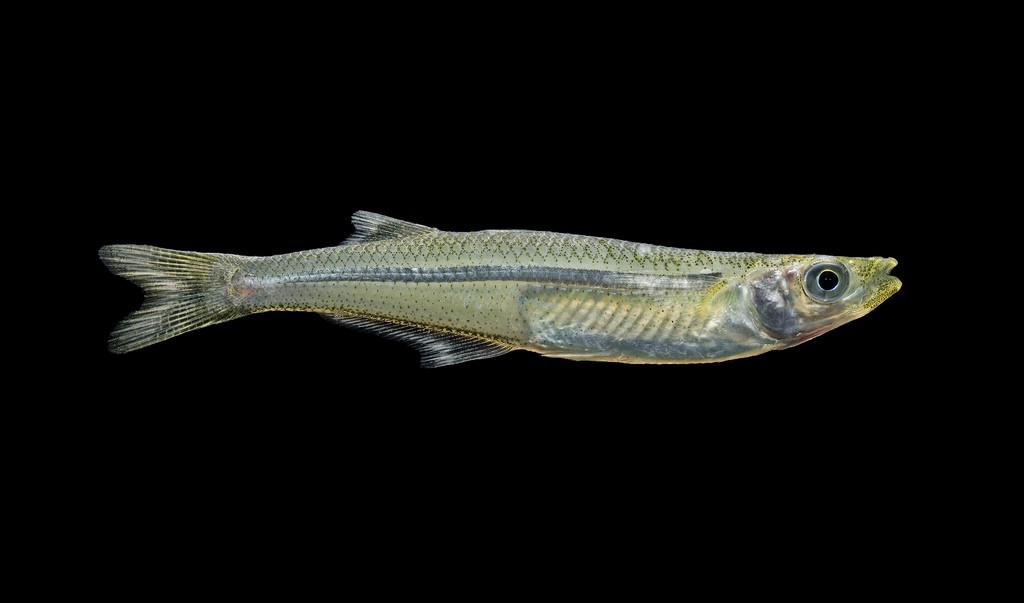
The Atlantic silverside (Menidia menidia), also known as spearing in the northeastern United States, is a small species of fish that is one of the most abundant fish species present in estuarine habitats along the Atlantic coast of North America. It is a common subject of scientific research because of its sensitivity to environmental changes. According to the IUCN Red List, this species is stable and has no major threats to its populations, so it is marked Least Concern. Despite being an extremely common species, most individuals die after one year once they migrate offshore, but a few will make it to two years. The fish is mostly translucent, with white coloring on the anterior end of the body and brown speckling on the top of the head, the posterior scales on the back, and near the jaw. A distinctive silver band runs the length of the fish, next to the lateral line. Their mouths are large compared to other Menidia species, and their first dorsal fins are placed more posteriorly than other silversides.

Habitat

The Atlantic silverside is found in the West Atlantic, ranging from the Gulf of St. Lawrence in Canada to northeastern Florida in the USA. It is one of the most common fish in the Chesapeake Bay and in the Barnegat Bay. Recent studies have found that their range may reach farther north than previously thought, as juvenile members of this species were found north of the Laurentian Channel in beach seines.

Diet

Silversides will eat a wide variety of prey items. Because of their smaller size (about 5–9 centimetres (2.0–3.5 in)), they are restricted to smaller prey such as copepods, mysids, cumaceans, barnacle larvae, and amphipods. Inshore and offshore silversides overall have a very similar diet, however offshore silversides tend to have a more diverse diet, likely due to availability of different types of prey. During the summer months when silversides are more present inshore, copepods are the dominant prey choice, and they tend to feed higher in the water column. However, in winter when silversides are farther out into the ocean, they tend to feed lower in the water column near the ocean floor. So offshore silversides predominately feed on epibenthic mysids.

Reproduction

Atlantic silversides live most of their lives in brackish waters but will travel more inland toward freshwater and estuarine systems to reproduce and spawn. Cordgrass is the preferred spawning substrate, and spawning only occurs during daytime. Once they reach sexual maturity, both male and female Atlantic silversides will develop their gonads seasonally. Spawning occurs from April to June but can be as early as March and as late as August, depending on the latitude. Reproductive activity is influenced by water temperature, as they must be warm enough for spawning and egg development. 16 °C (61 °F) is the minimum temperature required for spawning, while the optimal temperatures for larvae and egg development are between 17 and 20 °C (63 and 68 °F), respectively. Eggs will incubate for about seven to fifteen days, depending on how warm the water is.

Humans & conservation

These small fish are a delicacy in some countries like Portugal and are either eaten raw or fried in batter. They are also a common bait fish used by fishermen. This species also serves as a great example of environmental sex determination (ESD) in juvenile fishes, and many studies have been conducted on the topic. While northern populations are controlled only by genetics, southern populations are influenced by environmental conditions.

Where to see it

No dive sites list Atlantic Silverside yet. Explore the map to find sites near you.