← All marine life
Abalone
Species IUCN · Least Concern (LC)

Abalone

Haliotis iris, Gmelin, 1791

marine

About Abalone

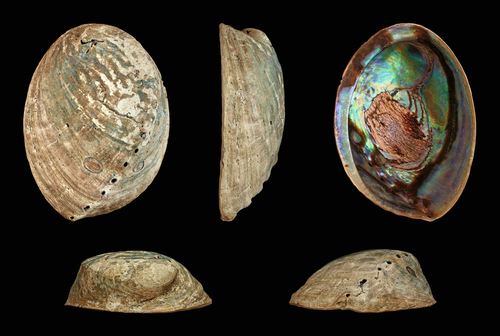
Haliotis iris, common name, blackfoot pāua, tuke o rangi, rainbow abalone or simply pāua is a species of edible marine gastropod mollusk in the family Haliotidae, the abalone.It is endemic to shallow waters on the coast of New Zealand. Widely consumed as a delicacy, its iridescent, nacreous shell is used for jewellery, decor and other handicrafts. Blackfoot pāua has cultural significance to both Māori and Pākehā and has become emblematic of New Zealand's cultural identity.

Appearance

Pāua belong to the molluscan genus Haliotis, more commonly known as abalone. The name Haliotis derives from Greek and means sea ear, reflecting the ear-like shape of the abalone shell. Three species of abalone occur naturally in New Zealand: blackfoot pāua (Haliotis iris), yellowfoot pāua (Haliotis australis), and whitefoot pāua (Haliotis virginea).

Habitat

This marine species is endemic to New Zealand. Blackfoot pāua is the largest abalone species found in New Zealand. It is most commonly found in shallow cool waters at depths less than 6 m (20 ft). The species occurs all around mainland New Zealand, Stewart Island, and the Chatham Islands. These sea snails often form large clusters in the sub-littoral zone on open, exposed coasts, where drift seaweed accumulates and there is good water movement. Blackfoot pāua grow to about 180 mm (7.1 in) in shell width.

Humans & conservation

Because of its iridescent shell, Haliotis iris is often used for jewellery, arts and carvings around New Zealand, and is considered a national icon alongside the silver fern and kiwi. Haliotis iris is the only farmed species of pāua found in New Zealand. That is mainly because of its size compared to its smaller relatives—the "yellowfoot pāua" and the even smaller "virgin paua". Haliotis iris is consiered a delicacy and is widley consumed in New Zealand, as well as being exported abroad. Pāua are especially culturally significant to the Māori people as taonga (treasure), and their shells are used in many traditional crafts.

Historically, Māori utilised the shell of blackfoot pāua to make Pā kahawai (trolling lures) to catch fish. Fish would be attracted to the colour and light flashing off the reflective surface of the pāua shell.

Part of

Where to see it

No dive sites list Abalone yet. Explore the map to find sites near you.